
What is homeschooling? Easy ultimate tips for parents
How Does Homeschooling Work?
Step 1: Choose a Curriculum or Learning Method
Step 2: Create a Flexible Learning Schedule
Step 3: Teach Using Different Learning Resources
Step 4: Monitor Progress and Assess Learning
Step 5: Encourage Socialization and Extracurricular Activities
Benefits:
1. Personalized Education
2. Flexible Learning Schedule
3. Stronger Family Relationships
4. Safe and Supportive Learning Environment
5. Greater Academic Flexibility
6. Encourages Independent and Lifelong Learning
Challenges:
Time Management
Parent Preparation and Teaching Confidence
Finding High-Quality Learning Resources
Keeping Children Motivated
Balancing Work and Homeschooling
Providing Social Interaction Opportunities
Is it the Right Choice for Your Family?
Questions to Ask Before You Start Homeschooling
Frequently Asked Questions (FAQs)
What Is Homeschooling in Simple Words?
Is Homeschooling Legal?
What Are the Biggest Benefits of Homeschooling?
Do Homeschooled Children Have Social Lives?
Which Homeschooling Method Is Best?
Final Thoughts: Is Homeschooling Worth It?
What Is Homeschooling?
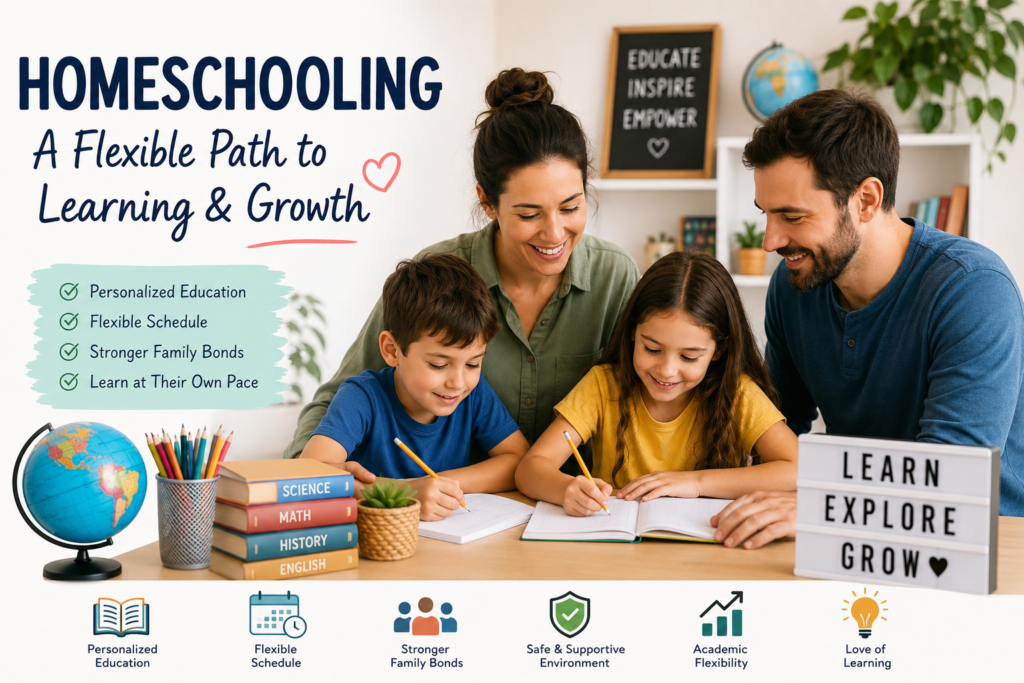
Homeschooling is an educational approach in which parents or guardians take primary responsibility for teaching their children instead of enrolling them in a traditional public or private school. Learning can take place at home, in libraries, museums, community centers, online or anywhere that supports educational growth.
One of the greatest advantages of homeschooling is its flexibility. Parents can customize the curriculum, teaching methods and daily schedule to match their child’s learning style, interests, strengths and future goals.
Today, millions of families around the world choose homeschooling because it offers personalized education, stronger family involvement and opportunities for children to learn at their own pace.
How Does Homeschooling Work?
Every family is unique but most follow a similar process:
- Choose a curriculum or educational philosophy.
- Create a learning schedule.
- Teach subjects using textbooks, online courses, projects or hands-on activities.
- Track progress through assignments, portfolios, quizzes or standardized tests where required.
- Participate in extracurricular activities, sports, clubs, field trips and community events to encourage social development.
Unlike traditional schools allows parents to adjust lessons whenever their child needs additional support or is ready for more advanced learning.
Benefits of Homeschooling
It offers numerous educational and personal benefits.
Personalized Education
Lessons are tailored to each child’s unique needs, strengths and learning style.
Flexible Schedule
Families can choose learning times that best fit their routines and lifestyles.
Stronger Family Relationships
Parents spend more meaningful time guiding and supporting their children’s education.
Safe Learning Environment
Children learn in an environment where parents have greater control over routines, values and learning experiences.
Greater Academic Flexibility
Students can progress quickly in subjects they enjoy while taking additional time to master more challenging concepts.
Lifelong Love of Learning
It often encourages curiosity, independence, critical thinking and self-motivation, making learning more enjoyable rather than simply compulsory.
Challenges of Homeschooling
Although homeschooling offers many advantages, it also requires dedication, planning, and consistency.
Common challenges include:
- Time management
- Parent preparation and teaching confidence
- Finding high-quality educational resources
- Maintaining student motivation
- Balancing work, household responsibilities, and teaching
- Creating opportunities for social interaction
Fortunately, many homeschooling communities provide support groups, co-ops, online classes, extracurricular activities and local meetups that help families overcome these challenges.
Is Homeschooling Right for Every Family?
There is no one-size-fits-all answer.
it works best when parents are willing to actively participate in their child’s education and create a supportive structured learning environment.
Before making a decision families should consider:
- Their educational goals
- Available time
- Budget
- Local homeschooling laws and regulations
- Their child’s learning style and personality
- Access to educational resources and community support
Careful planning can help determine whether homeschooling is the right choice for your family.
Frequently Asked Questions
What is homeschooling in simple words?
It is educating children at home or outside a traditional school with parents or guardians taking primary responsibility for their education.
Is homeschooling legal?
It is legal in many countries; however, laws and requirements vary by country, state or region. Families should always review local education regulations before getting started.
What are the biggest benefits of homeschooling?
The main benefits include personalized education, flexible scheduling, stronger family involvement, individualized learning and the ability for children to learn at their own pace.
Do homeschooled children socialize?
Yes, Many homeschooled children participate in sports teams, clubs, community programs, volunteer activities, field trips, homeschool co-ops and other group events that provide regular opportunities to build friendships and social skills.
Which homeschooling strategy is best?
There is no single best approach. Many families combine structured lessons, project-based learning, technology-assisted instruction and interest-led education to create a learning experience that best suits their child’s needs.
Final Thoughts
Homeschooling is much more than learning at home. It is a flexible, personalized approach to education that adapts to each child’s unique needs, interests and goals. Whether you choose a structured curriculum, project-based learning, technology-assisted instruction or a blend of multiple teaching methods, it empowers families to create meaningful and engaging educational experiences.
The most successful journeys remain flexible, encourage curiosity and nurture confident, independent lifelong learners. By selecting strategies that align with your family’s values and your child’s interests, you can build a rewarding learning environment that supports both academic success and personal growth.